

If you’re exploring a website redesign and keep hearing terms like “headless WordPress,” “GraphQL API,” or “Next.js application,” we get it — it can sound like alphabet soup. But don’t worry. You don’t need to be a developer to understand why this new approach to WordPress might be the best choice for your team, your content, and your future growth.
Let’s break it down in plain language.
Traditional WordPress: One Size Doesn’t Always Fit All
Most marketers are familiar with the traditional WordPress site setup. It’s a popular content management system (CMS) that combines a user-friendly back end (for content creation) with a ready-made front end (the design your visitors see). It’s been the default for years because of its ease of use, rich WordPress dashboard, and plug-and-play approach to things like custom post types, WordPress themes, and plugins.
But as websites evolve to support mobile apps, smart speakers, and rich digital experiences across various platforms, the monolithic system of traditional WordPress can start to feel limiting.
Headless WordPress: Decoupling for Greater Flexibility
Here’s where the headless approach comes in.
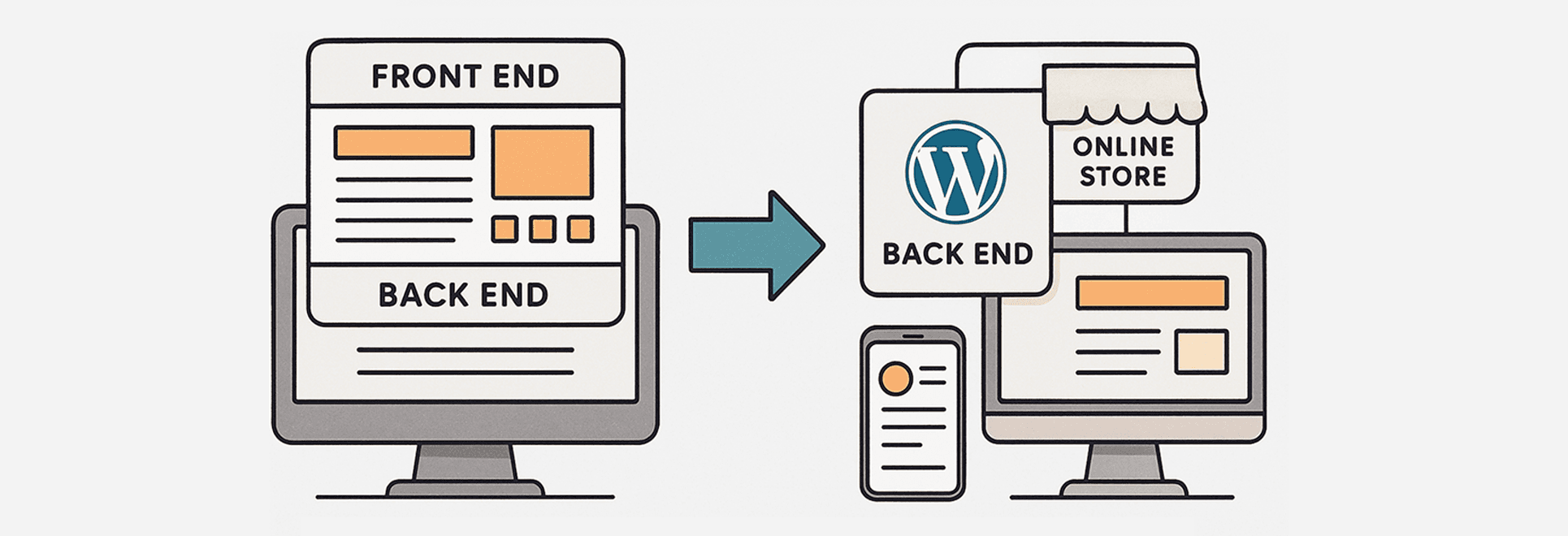
A headless WordPress setup separates your WordPress backend (where you manage content) from your front-end application (how your site looks and behaves). This is called a decoupled architecture or decoupled solution — and it gives you complete control over both.
The result? You keep the power and familiarity of WordPress CMS for your content team, but developers can build a custom front-end using modern JavaScript frameworks like Next.js, optimized for faster load times, better performance, and more engaging user interfaces.
It’s like getting a tailored suit instead of buying off the rack — built exactly for your specific needs.
How Headless WordPress Works (And Why It Matters)
In a headless system, WordPress still powers your content database, but it delivers that content via an application programming interface (API) — like the GraphQL API or built-in WordPress REST API. This allows developers to send content to a variety of frontend frameworks and devices — not just a WordPress theme.
Think: online stores, mobile apps, static websites, and more.
Your headless WordPress site can have a truly dynamic and flexible interface while still being powered by the same easy-to-administer WordPress CMS backend — all of which contribute to high performance, stronger security measures, and a better user experience.
Benefits of Headless WordPress for Marketers
- Greater flexibility for web designers and developers
- Better security by reducing exposure to DDoS attacks and other vulnerabilities
- Faster load times = better results in search engines
- Keep the familiar WordPress data, content creation workflows, and plugin support (hello, WPGraphQL plugin and Advanced Custom Fields)
- Adaptable for legacy systems or newer tools
It’s a good option if your team needs a site that grows with your business and delivers polished, high-performing digital experiences.
What About the Drawbacks of Headless WordPress?
We’ll keep it real — a headless WordPress website takes more planning. It’s a decoupled approach that requires technical expertise and a partner who understands your content needs and business goals.
- You’ll need developers familiar with modern JavaScript frameworks like Next.js.
- Search engine optimization (SEO) requires careful planning since javascript-centric websites have always struggled with SEO.
- Much of the developer tooling for headless development is newer compared to the very stable/long-existing ecosystem of traditional WordPress
- It requires not only developers with experience in javascript, but developers that can bridge the two ecosystems when challenges arise.
But here’s the good news: you don’t need to throw out WordPress. The WordPress core is still there, including support for key tools like WordPress API, WordPress plugin libraries, and the intuitive WordPress installation process.
For marketers, that means your content creators don’t need to learn a new system or give up the tools they already use.
How Does Headless Compare to Other Headless CMS Options?
There are lots of headless content management systems out there. Here’s a quick look:
WordPress (Headless System)
- ✅ Intuitive, widely used
- ✅ Easy for marketers and website owners to adopt
- ✅ Huge ecosystem of plugins and extensions
- ❌ Requires developer setup for the frontend display
HubSpot CMS
- ✅ Seamless integration with CRM, marketing tools, and automation
- ✅ Great for non-technical teams who want built-in tools
- ❌ Less flexibility and customization than a true headless CMS
- ❌ More expensive for larger teams or advanced use cases
Other Headless CMSs (like Contentful or Sanity)
- ✅ Built from the ground up for the headless approach
- ✅ Fast, scalable, and flexible
- ❌ Steeper learning curve for marketers
- ❌ No built-in familiarity or legacy plugin support like WordPress
If you’re already using WordPress and want to evolve your site without disrupting your team, headless WordPress is often the best choice — the right solution for today’s needs and tomorrow’s possibilities.
How We Build Headless WordPress Sites at Integrity
We typically use Next.js applications on the front end — part of the rapidly growing JavaScript ecosystem. This allows us to build fast, interactive sites that can be changed independently from the WordPress server on the back end. That means if your design needs change, or if a new technology rolls out (it always does), your site won’t need a total overhaul.
With a headless WordPress setup, your site is flexible, secure, and prepared for future growth. It’s also easier to train new web developers on tools they already know (JavaScript, not PHP) while still leveraging WordPress as a popular content management system.
Is Headless WordPress the Right Move?
If you’re a marketer or content lead exploring a WordPress redesign or considering a transition from a traditional CMS, it might be time to explore a headless WordPress system. Especially if:
- Your site needs better performance and flexibility
- You’re creating content across various platforms
- You want to avoid getting stuck with a dated tech stack
- Your team needs complete control over design and content
A headless WordPress website gives you the power of a modern, custom frontend framework with the stability and ease of WordPress behind the scenes.
Ready to explore the benefits of headless WordPress for your site? We’d love to help you find the right choice for your next website — and guide your team through a complete guide to smarter, faster, and more future-ready content management. Contact us today to start a conversation!
Additional Resources